Showing posts with label schuylkill center. Show all posts

Friday, May 16, 2014

HANGING UP THE HAT


Here in Philadelphia, there are trees and then there are trees.

On this particular day, I was hunting for the first kind of tree.

It goes by the name of mountain laurel.  It’ll never be the biggest tree in the woods.  It’ll never be the kind of tree that shows up on the nightly news but I’ve been on the lookout for mountain laurel for weeks now.

I’ve been trying to catch its flowering, which I’ve heard is spectacular.

I already knew where they were growing.  They were up there, off the trail…


…typical of the mountain laurel, sprouting up on a steep and rocky hillside called a ravine.

That’s French for a violent rush of water and it describes the type of land that makes the shape of a vee, the landscape that forms around a narrow valley cut deep with a running stream.


That’s exactly where I was, on a trail called the Ravine Loop.

Away from the path, up the sharp banks of the stream?

That’s mountain laurel country.

That’s why they’re so hard to find.  They’re off the trail.

They’re way up here…


…growing on the pitched and slanted shores of the Ravine Loop.

It’s hard to get up here, rough going and slippery with rotting compost.   I had to keep my eyes to the ground and so I noticed the small leaves popping out of the woodland carpet.

These are the other kinds of trees.  Big trees.

Here’s a chestnut oak…


…and here’s a tulip poplar.


The big trees, they are a-coming.  Some of them are already staking out their claim.

Once they take over, they can choke out whole fields of sunshine, drowning out the understory with their high green canopy.  They don’t leave much room for the smaller trees like the dogwood and the redbud, the crabapple and the hawthorn.

And, of course, my prey for this afternoon…


…the mountain laurel…


…that small tree with the dark evergreen leaves and the crooked trunk.

Its bark has a very stringy and shaggy texture, like an old frayed rope that’s been too many days out to sea.


Its flower would be a real boon to my blog.  For starters, it’s the state flower of Pennsylvania…


…usually depicted next to our state bird, the ruffled grouse.

Their flowers grow in groups of twelve or more, they say, at the terminal ends of the branches, upright above the leathery leaves.

From what I’ve seen in the field guides, the flowers are bright and showy, resembling little cups.  Something found in a child’s tea party.  They’re white or pink and each flower has ten long pistils, purple at the tips, that clamp down on the petals and push the flower open.

Even more remarkable, they’re supposed to be a very action-packed bloom.

They are spring-loaded, wrote John Eastman in his field guide for forests and thickets, and they actively bombard an alighting insect with pollen.

You can test this mechanism yourself with a pin or grass blade.  The slightest touch…


..and he goes on and on.  I wanted very badly to test this mechanism myself…


…but I was too early.  They were just barely budding.

I’ll come back here next week to catch them in bloom but, by that time, this whole story called Philly Trees will be over.

This is the final post, the last adventure.  This is the big finish and this is exactly where I want to end this blog…


…off the trail.

Wednesday, June 5, 2013

COOKERY WITH JON SPRUCE


In 1747, a young British wife of an Irish soldier wrote and published what would become a most popular book.

Her name was Hannah Glasse and the book was The Art of Cookery Made Plain and Easy.  It was reprinted twenty times by the end of the 1700s and could be found in just about every kitchen in the English countryside and the American colonies.

It is considered one of the first collections of rural recipes, designed for the home and the hearth instead of the court and the castle, and written in plain English to help and instruct wives and domestic servants instead of chefs, hunters, butchers and gourmets.

It was the first cookery book to take into account a house’s purse and economy, favoring the local herbs, fruits and wild game that could be found and hunted, for free or for cheap, in the typical rural village, out in the street markets or along the country roads.

This, in itself, was revolutionary.  The subtitle of the book says it best: far exceeds any Thing of its Kind yet publifhed.


At the end of her introduction, Hannah Glasse states her simple mission: only hope my Book will answer the ends I intend it for; which is to improve the servants, and save the ladies a great deal of trouble.

Flipping through the table of contents, there are recipes for every sort of occasion and audience. Chapter Four is entitled: To make a number of pretty little dishes fit for a supper, side dish, and little corner dishes for a great table.  Chapter Ten contains recipes under the heading, Directions for the Sick, and Chapter Eleven is written For Captains of Ships.

There’s even a recipe for moonshine, plus directions on how to make homemade wines using raspberries, quince, cherries, elderberries and dandelion.

She cooked with a whole different menagerie of animals.  Sure, you got the usual proteins of beef, pork, poultry, mutton and eggs, plus salmon and carp and cod, anchovies and mackerel.

But then there are recipes for tame ducks, teal, wigeons, woodcocks, snipes, partridges, pigeons, lark and eel.


One of her most famous recipes is for traditional jugged hare.  We would call it rabbit stew except, when making jugged hare, you stuff the hare in a jug and place the jug in the pot of simmering broth.

That’s a technique that hasn’t survived into the twenty-first century but I’m not complaining.  In the end, Hannah’s directions are to just pick apart the meat from the bones of the hare and add it to the flavorful broth, serve hot.

Skipping that step seems okay.  Saving trouble was Hannah’s goal, after all, and in today’s modern kitchen, actually jugging a hare seems like a whole mess of trouble.

But what about the first step of her recipe?

Go catch ye a hare.

We've made it pretty easy to skip that step too.

Well, not me.

Not this time.  Not now, especially not now. 

Citybillies, these are the days and nights of the Strawberry Moon and there is plenty of food out there for the taking, just ripening on the vine, ready to be plucked and picked from the mean streets of the city grid and into the warm kitchen of the urban cabin.

So, in the great tradition of Hannah Glasse, I humbly present Cookery with Jon Spruce…


…wherein I will forage and prepare one of spring’s best recipes, featuring two of my favorite Strawberry Moon ingredients.


“OUR DIET MUST ANSWER TO THE SEASON…”

First step in this recipe?

Fetch ye some honeysuckle.

Wednesday, January 23, 2013

THE SEASON OF THE MOSS


Walking up and down the rows of Gina's farm, I saw baby turnips left to winter in the fields.


I saw broken carrots turning themselves out through the mud…


…mustard greens, paused in full flourish, and garlic shoots bending in the bitter breeze.


In the woods, under the thick layer of rusty leaves, I found cracked hickory nuts and empty black walnut shells.


I found acorns caps and peeling river birch bark.


Walking down the trail, the greeny underbrush was gone…just gone…and my eyes kept catching the quartz, glowing through the thick gloom, splitting through the damp dirt…


…its snow-colored facets bright as a moonscape.


These are the totems of winter.

Season of the home, season of the hearth?  That’s what I was running away from.

It almost done me in…the interior of my urban cabin felt more and more like a trap.

I was lucky to escape.  A shutter no more, I was out the house, out the gate, out in the January wilds.

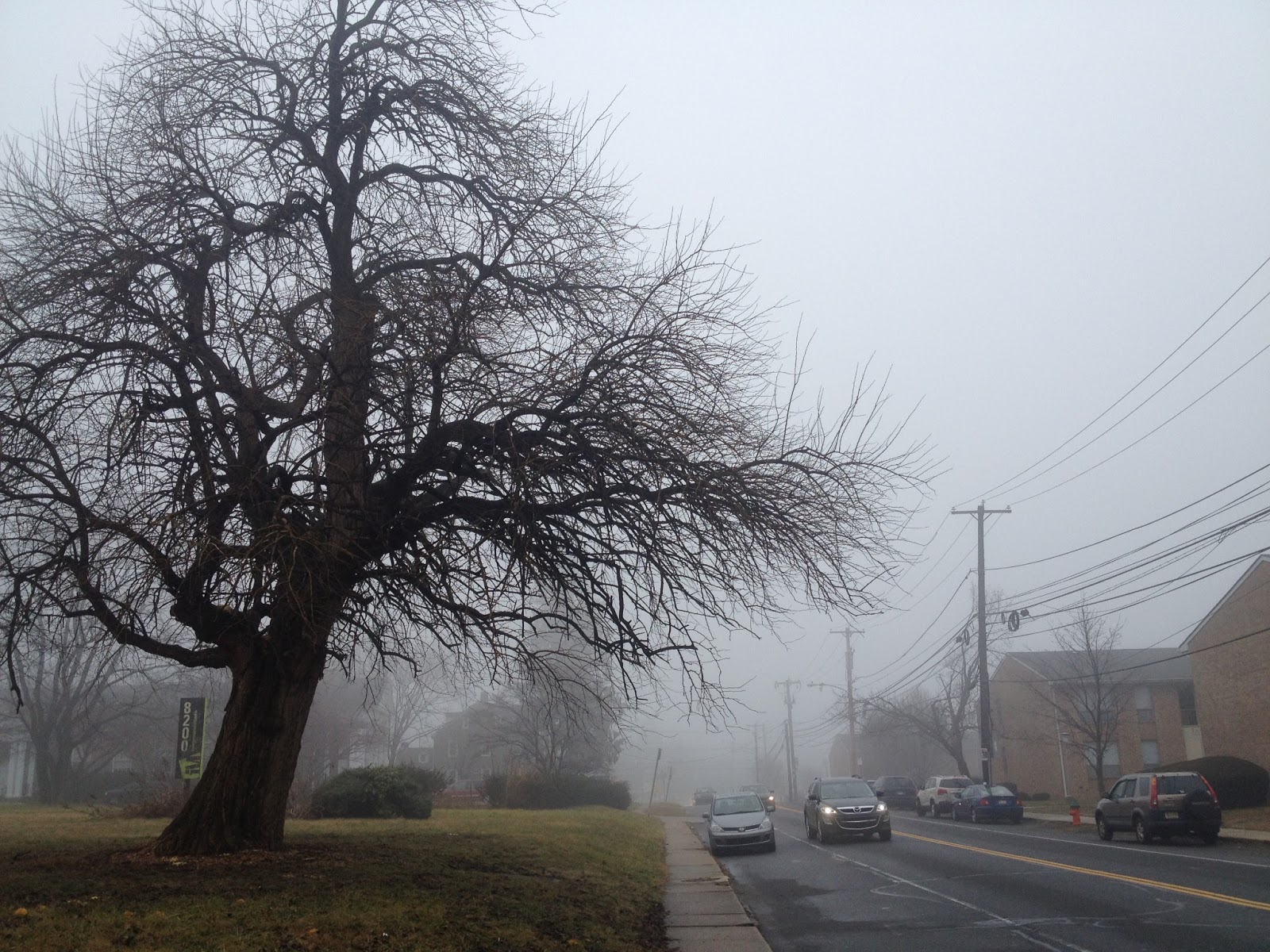
I’d left the house just after sunrise and drove north through the misty dawn…


…watching the spruce trees tower over the scattered homes, breaching through the hanging fog.


I parked my car next to the fence-row of hawthorns.


These woods and this trail were very familiar to me but I’d never seen them like this before.

Where was I?

Thursday, October 11, 2012

BIRDBERRIES: THE DUCKS FLY MOON


In case you didn’t notice, it’s officially October.


We’re halfway through the first moon of autumn, the Ducks Fly Moon. 

Beware, citybillies.  This moon is a game changer.

According to the farmer’s almanac, at the beginning of this moon, the length of daylight is a little bit over twelve hours long.  Here in the middle of the moon, a day spans about eleven hours, thirty minutes long…and by the end, the sun will rise at 7:30am and set at 6:15pm, a mere ten hours, forty five minutes of precious, cold, cloudy daylight.

From here on out, the moon dominates the twenty-four hours…these drizzly days of October.
 
Looking at the almanac’s chart of sunrises and sunsets, we are losing one minute of sunlight per day every morning…and sometimes two minutes of sunlight every evening …the two bookends of night are slowly, mechanically closing in…no escape from October.


Take heed, citybillies.  This drastic change of daylight, these falling temperatures, these days turning into nights …this moon is a trigger.

It sets things in motion.


Out there…beyond the frosted pane…beyond the cozy confines of a warm blanket and a hot cup of cider…things are changing...things are moving just as fast as the day is retreating…spiders are crawling into the warm home, hiding in the basement, nesting under the bed…snakebite cases skyrocket…and in the kingdom of Plantae?

Things reverse.  The growing season stops…the kilter comes off…plants and trees now spend all their energy undressing for the winter.  They’re battening down the hatches.  You can notice it first in the colors.  Greens turn to reds and oranges, russets and yellows.

Well…not exactly.

The trees aren’t changing colors, really.  More precisely, they are losing colors.  Well, to be exact, they are losing one color…green.

Here’s what’s happening.

Thursday, August 9, 2012

BLUE MOON TREE HUNTS


The year 2012 will go down in history as the year of broken records.

I’m not talking about the Olympics.  I’m talking about the weather.

The long-awaited annual report from the National Oceanic Atmospheric Administration was finally released and, to no one’s great surprise, it’s official: last July was the hottest month on record for the continental United States.

The previous record holder?  July 1936, the heart of the Dust Bowl era.

For 32 states, last July now ranks as one of their top ten hottest months ever. 

Remember that warm winter?  Well, consider another record broken, a record that’s stood for the last 117 years.  It’s been the warmest 12-month period in the United States since 1895.

Records are shattering all over the country.

Oklahoma has been suffering a heat wave that has lasted over 20 days.  Iowa had ten days in July of triple-digit heat…and that’s a state where they average only one of those days per year. Denver also has an average of one day of 100-plus temperatures per year.  Last month, seven Denver days went over 100-degrees, making July 2012 their hottest month ever…and that’s after suffering through their hottest June ever, back to back record-breaking months.  Remember July 7th?  You’d remember if you lived in Indianapolis.  That turned out to be their hottest day in history.  And Wisconsin?  They normally get seventeen days of 90-degree weather for the entire year…and one day of triple-digit heat every two years.  This last July?  It was all sizzle.  Seventeen days of 90-degree heat and three days when it broke over 100-degrees.  That’s an unbelievable anomaly.  Hottest month ever.  It’s not even a competition.

And for Philadelphia?  We fall right in line.  It’s been an average of three degrees warmer for the last twelve months and, for July 2012, it was an average of four degrees hotter, breaking the record for our hottest month ever.  Our previous record holder?  July 1947.

So take your place on the pedestal, July 2012.  The gold medal goes to you…and, thank Coyote, it’s over and done with…July 2012 is officially history.

Stay strong, citybillies.  The endless summer is almost ending…and, if you know your trees and plants, you’ll be able to see the signs of cooler weather even sooner than most.

One sign of the impending fall?  The sunflowers are starting to droop down, dry up and close.


Do you need some hope from the heat?  Then just pay attention to the trees.