Wednesday, September 19, 2012
WILLOW COUNTRY: THE COBBS CREEK WATERSHED
Philadelphia is currently coasting, in the most pleasant way, straight into a breezy and brisk autumn. Tricky Coyote is making his long retreat into the woods and Brother Grizzly will soon take over the moons, one final burst of food and action before the long, sleepy winter.
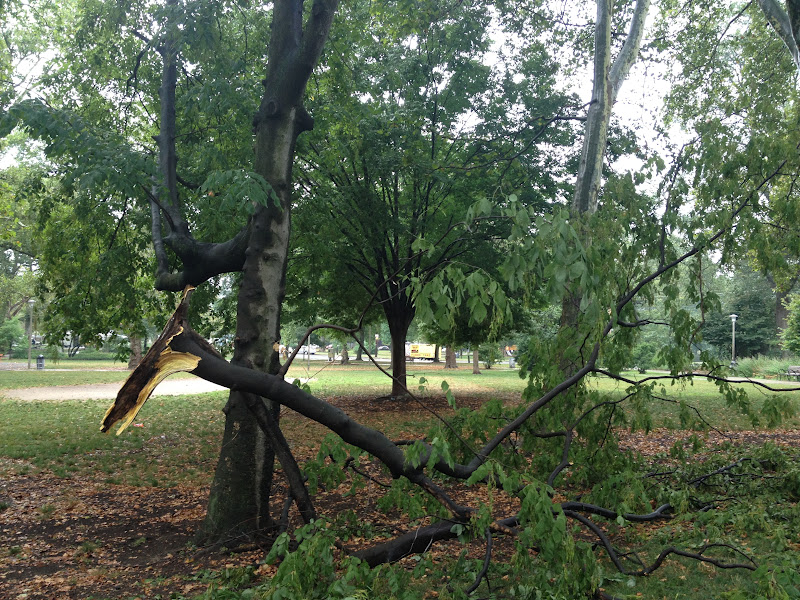
The fall is all about movement, all about dropping. You can hear it happening as you walk down the streets. Acorns are falling. The sky is falling, too, earlier and earlier. Sycamore branches are breaking. Chestnuts are splitting. The leaves will soon drop. The temperatures too. Ducks and birds will fly away as others stop by on their marathon migration. Same with the monarch butterfly. Any day now, the burst of autumn colors will be lighting up the Philly treeline and this blog will be busy, busy, busy.
Flowers, fruits and then leaves…another spectacular show is only a few weeks away from its opening notes.
And yet, as it always does during this time of year, my thoughts and meanderings take a ruminative and macabre turn.
You see, two years ago, at around this time, I was stung by a yellow jacket while camping and, unaware that I was allergic, I soon went into anaphylactic shock and, soon after that, I was knocking on heaven’s door.
Three things saved my life.
Thursday, September 6, 2012
THE HARVEST MOON: PUTTING ON THE POUNDS
It’s been about three weeks since my last post.
What have I been doing?
I guess it’s time to come clean.
It always happens at this time of year and yet, even though it happens at the same time every year, it always seems to come as a surprise.
One day, you wake up, same as usual…you have the standard breakfast of coffee and a breath mint…you find your cleanest dirty shirt, you check the farmers’ almanac, you hit the day and then you look down and…well, there it is.
Citybillies, I done got fat.
It wasn’t my fault. It was Coyote. Coyote did it…him and his last moon, this Harvest Moon.
Labels:
black walnut,
famous trees,
figs,
hardy kiwi,
hickory,
local food,
mimosa,
pawpaw,
philadelphia,
philadelphia farmers markets,
philadelphia neighborhoods,
philly,
prairie banana,
summer fruit,
trees,
wild fruit
Sunday, August 19, 2012
NORTH BY NORTHWEST: BLOCKBUSTER TREES
Contrary to popular belief, I have a lot more interests than just trees.
Okay, ladies? I’m not just all about trees.
I got a lot of passions. I got a lot of interests. I’m smart. I can do things.
My other passions? I like my sports. I like my cars. My favorite car company? Pontiac. After all, the real Pontiac was an Ottawa chieftain from the Great Lakes who led an unsuccessful revolt against the British in 1763. Hey, I like to do a lot of things. Restaurants, bars, museums, art galleries, used bookstores? Let’s go. I read a lot of novels. I especially like dark science fiction, hard-boiled crime stories and violent westerns. I like going out. I like fine California wine, good Pennsylvania canned beer and bourbon. Ah, bourbon. That’s how you say Kentucky in whiskey.
I’m also a movie buff. I love the movies…and that’s why I am shocked – shocked – at the radical change that just happened with the newest Sight & Sound list of the greatest movies of all time.
Every ten years, the British cinema magazine, Sight & Sound, mails the voting ballots to movie critics and filmmakers all around the world, asking them all the same question: What is the greatest movie of all time?
Since 1962, Citizen Kane has remained at the top of the list…until now.
The newest greatest movie of all time? Alfred Hitchcock’s 1958 psychological San Francisco thriller, Vertigo.
I never thought I’d see the day.
It reminds me of the famous Native American Zen story…the one where the Great Chief assembles all of Turtle Island’s wise men together in one place and demands, from all of them, that they solve this profound puzzle: invent a sentence that will be true and appropriate for all times.
Their final answer: And this too shall someday pass.
It's true. The only constant is change. Everything is fleeting, everything is temporal, nothing remains the same. Down here in the mean streets of Philly, we say it like this: you can’t be king forever.
And so, in 2012, Citizen Kane slips down a notch to number two and Vertigo takes the coveted catbird seat at the top of the Sight & Sound greatest movies list.
It is a great movie, full of twists and turns…and I’m not just talking about the city streets of San Francisco where it was filmed.
My favorite part? When Scottie, played by Jimmy Stewart, takes the blonde enigma Madeleine to the redwoods forest on a dark and gloomy afternoon.
This scene was actually filmed in the Big Basin Redwoods State Park in Santa Cruz. During that pivotal scene, Scottie shows Madeleine the exhibit of a giant cross-section of a redwood and has this meaningful, puzzling exchange:
Scottie: What are you thinking?
Madeleine: Of all the people who’ve been born and have died while the trees went on living.
Scottie: Their true name is Sequoia sempervirens…‘always green, always living.’
Then, Madeleine points to the concentric rings in the wood and, speaking to the tree itself, says: Somewhere in here, I was born. And there I died. It was only a moment for you. You took no notice.
Pure. Movie. Magic.
GREATEST TREES IN CINEMA HISTORY
People are always asking me: Jon Spruce, what are the five most famous trees in cinema history?
Thursday, August 9, 2012
BLUE MOON TREE HUNTS
The year 2012 will go down in history as the year of broken records.
I’m not talking about the Olympics.
I’m talking about the weather.
The long-awaited annual report from the National Oceanic Atmospheric
Administration was finally released and, to no one’s great surprise, it’s
official: last July was the hottest month on record for the continental United
States.
The previous record holder? July
1936, the heart of the Dust Bowl era.
For 32 states, last July now ranks as one of their top ten hottest months
ever.
Remember that warm winter? Well,
consider another record broken, a record that’s stood for the last 117
years. It’s been the warmest 12-month
period in the United States since 1895.
Records are shattering all over the country.
Oklahoma has been suffering a heat wave that has lasted over 20 days. Iowa had ten days in July of triple-digit
heat…and that’s a state where they average only one of those days per year.
Denver also has an average of one day of 100-plus temperatures per year. Last month, seven Denver days went over
100-degrees, making July 2012 their hottest month ever…and that’s after
suffering through their hottest June ever, back to back record-breaking
months. Remember July 7th? You’d remember if you lived in
Indianapolis. That turned out to be
their hottest day in history. And Wisconsin? They normally get seventeen days of 90-degree
weather for the entire year…and one day of triple-digit heat every two
years. This last July? It was all sizzle. Seventeen days of 90-degree heat and three
days when it broke over 100-degrees. That’s
an unbelievable anomaly. Hottest month
ever. It’s not even a competition.
And for Philadelphia? We fall right
in line. It’s been an average of three
degrees warmer for the last twelve months and, for July 2012, it was an average
of four degrees hotter, breaking the record for our hottest month ever. Our previous record holder? July 1947.
So take your place on the pedestal, July 2012. The gold medal goes to you…and, thank Coyote,
it’s over and done with…July 2012 is officially history.
Stay strong, citybillies. The endless
summer is almost ending…and, if you know your trees and plants, you’ll be able
to see the signs of cooler weather even sooner than most.
One sign of the impending fall? The
sunflowers are starting to droop down, dry up and close.
Do you need some hope from the heat?
Then just pay attention to the trees.
Saturday, July 28, 2012
THE NOTORIOUS TREE HOUSE OF FELTONVILLE
Just the other evening, I was out tree-hunting in West Philly. It was blazing hot, steamy and sticky, so I headed
to Clark Park. I wanted to catch some
shade. I wanted to cool off and I wanted
to spend the last few hours of the day watching one of my favorite oaks in the
entire city.
On my way through the park, I noticed that one of the recent thunderstorms had
split a branch off a yellowwood tree.
Ever wonder why it’s called a yellowwood?
Well, here’s your answer:
The oak tree that I was hunting was on the other side of the park. It’s really one of my favorite oaks in the
city. I love the way it leans over the
grassy bowl. On this particular night,
the leaning oak was the setting for a Shakespeare in the Park rendition of The Merry Wives of Windsor.
William Shakespeare was, like many artists, a romantic fan of trees and
flowers, plants and herbs, nature and the wilds. Who can forget the bloody climax of Macbeth…when Thane Macduff disguises his
army as trees so they can secretly advance upon the murderous Macbeth’s castle,
inspiring my favorite Shakespeare quote of all time:
Macbeth’s Messenger: As I did stand my watch upon the hill,
I look'd toward Birnam, and anon, methought,
The wood began to move.
I look'd toward Birnam, and anon, methought,
The wood began to move.
I, too, have seen the woods move.
So, there I was, enjoying the oak, enjoying the shade, enjoying the
Shakespeare…finally cooling off, just getting used to the Old English…when my
cellphone started blowing up with voicemails and text messages, all saying the
same thing: Jon Spruce, turn on the local
news. There’s a tree attacking a house
in the Northeast.
I need a vacation.
Labels:
catalpa,
clark park,
feltonville,
hardy orange,
magnolia,
mimosa,
old city,
osage orange,
philadelphia,
philadelphia neighborhoods,
philly,
silk tree,
street names,
summer fruit,
trees,
weed trees,
west philly
Thursday, July 19, 2012
THE SASQUATCH TREE
Hot enough for you?
Ain’t that just like Coyote? Ain’t
that just like the Strong Sun Moon?
Blasting
that unbearable, that stifling, that maddening heat just when you were on a
roll. Makes you want to just sit at home
in air-conditioning and watch bad TV and bad baseball. Just when the days get
long, just when the shore opens, just when the trees are bearing all that
fruit, just when the local farmers’ markets are bedecked and bedizened with all
that summer bounty.
Including the heirloom tomato, one of the greatest foods of all time…
…and I do mean all time. Although this is relatively a new food on the
farm stand scene, it’s actually been around for a long, long time.
This is, by anybody’s standard, an old food.
According to the farmer’s almanac, the first of the tomatoes are normally
ready by the first full moon of July, usually by the rising of the next moon of
the cycle: the Ripe Berries Moon. That makes
sense.
After all, the tomato is, technically, just a giant berry.
But this abnormal heat – this gut-wrenching, sweat-pumping,
underwear-clumping heat -- has launched tomato season a week or so ahead of
schedule.
Ain’t that just like Coyote?
I’m not complaining. Citybillies,
take Jon Spruce’s advice: get your hands on some local 2012 heirloom tomatoes. If there’s one thing out there enjoying this
heat, it’s a tomato.
I even got a recipe for you. Fry up
two slices of bread, preferably sourdough bread. Schmear on a guilt-free layer of
mayonnaise. Add thick slices of ripe
tomato. Sprinkle on some good salt. Eat over the sink, alone.
The heirloom tomato is, without question, the greatest comeback ever in the
long, troubled history of grocery. Back
when it was first marketed to restaurants and to grocery stores, it went under
the name of ugly tomato. It was the corporate way of explaining to the
paying public that these tomatoes were supposed to be wrinkled, cracked, scarred,
misshapen and, even, ripe when green, orange or yellow.
Only years later did they start selling it under the more distinguished name
of heirloom.
Yes, after years and years of subjecting the public to the year-long,
season-defying crops of perfect, consistent, bland, dry, tasteless tomatoes,
the Big Ag marketers had to re-educate us on the old-ways lesson that, in the
wild, things sometimes get a little ugly.
Does this look ugly to you?
Each tomato is like its own little starburst. Each one is like a little sun. The best part? Although you can tell which tomatoes are the
same kinds of tomatoes, each one has its own rays of colors, its own patterns
of wrinkles, its own carousel of flavors.
The tomato as an individual. Sorry to
say, but it’s a 21st Century Concept.
Well, more accurately, it’s a 21st Century Comeback.
These tomatoes hearken back to the good old days, before that
large-scaled, mass-produced onslaught of big, red, perfect tomatoes, available
year-round, bombarded the produce departments of nation-wide supermarkets. Before the invention of refrigerated tractor
trailers. I don’t even understand why
anybody even serves tomatoes outside of Coyote’s moons. I’m talking to you, all you sandwich and
hoagie shop managers.
More accurately, though, these tomatoes hearken back to the ancient farmers of
South America and Mexico, the first civilizations to propagate the modern
tomato. From what we are told of
heirloom varieties and seeds, these are the descendants of the kinds of
tomatoes that people used to enjoy hundreds of years ago, going back to 700 AD.
Their return to our world of grocery and farm stands is a gift from the Old
World, a true and treasured heirloom.
There are some trees that can also be considered heirlooms.
Even though they may now be common all over our city grid, there are some
trees that had disappeared for eons but have returned to our modern world.
Heirloom trees.
These trees hearken back to the Old Days, to the wild back-wood groves of
colonial country or, even further back, to the very first days of trees
themselves, to the primordial soup that bedecked and bedizened the landscapes
of the super-continent we call Pangaea.
People are always asking me: Jon
Spruce, if you had a time machine, where would you go?
The answer is Pangaea.
Sunday, July 1, 2012
MY COUNTRY, TIS OF TREE
Happy Independence Day, Philadelphia and all of its trees. I’ll try to take a break from all that Original People mumbo-jumbo and spend a day celebrating the totems of the United States of America.
The national animal? The bald eagle, although a case could be made for other native animals: the beaver, the bison, the shad, the crayfish, the painted turtle or the moose.
The national flower? The rose. That’s a little disappointing. There are a lot of reasons why it could be the marigold, the dandelion, the prairie rose, the yucca flower or actually the sunflower, one of the few flowers native only to this Turtle Island.
The national tree? Officially the oak. Another disappointment. How about something very specialized to America, something akin to Turtle Island: the sequoia, the tulip poplar, the ponderosa pine, the southern live oak, the Joshua tree, the bristlecone pine or the saguaro cactus?
Well, you can’t say I didn’t try.
And the national colors? The red, white and blue? I don’t know. Maybe it’s just that we’re in the heart of the Strong Sun Moon, but I am enchanted and bedazzled by so many more colors than just those three.
There is no scientific basis for the following statement but I am going to say it anyway: it takes a real strong sun and a real high heat to brew all that summer color. The first colors of the year are usually white, red, yellow and, of course, green…but, by the time we get to the Strong Sun Moon, we get the oranges, the blues and the purples, plus all the different shades and blushes of the original colors: the pinks, the crimsons and the jades. In the summer, we go all the way around the color wheel.
I believe, just on a gut instinct, that it simply takes longer for the trees and plants to produce those complicated colors than it does the reds and whites and greens. But, like I said, I have no basis to believe that it’s true.
Except for my own eyes, of course. Here is a typical farmstand in the very beginning of the Hardy Zone Seven growing season, mid-May:
And here are some farmstands in the heart of the Strong Sun Moon:
It’s just a theory but I’m saying that it takes more time, more sun and more heat to make all that color. Although, come to think of it, the rainbow swiss chard kind of destroys that theory.
Well, you can’t say I didn’t try. Let’s move on. Let’s go downtown to historical Philadelphia, see what the trees are doing over there.
Subscribe to:
Posts (Atom)